Okay so.
Let me tell you about Rahul first, because this whole article kind of started because of him.
Rahul was in my neighbourhood. B.Com, 2023 batch, scored 62% — nothing to write home about. No IIT, no IIM, no fancy placement cell. His dad works at a sarkari office in a tier-3 town in UP. You know the type. Middle-class, stable, scared of risk.
When Rahul told his father in 2023 that he wanted to skip the "bank exam rat race" and try digital marketing career instead, his dad lost it. "Kya hai yeh digital-digital? Instagram pe photo daalte ho toh job milega?" Classic.
Fast forward to 2026. Today Rahul makes ₹95,000 a month. Every month. From his bedroom. Clients in Dubai, London, and one guy in Toronto. Zero commute. He logs off by 4 PM most days and goes for chai with the same father who once threw a pen at him for "wasting his future."
(The dad now tells his friends his son is "doing Google." Close enough.)
Here's the thing though — Rahul is not some genius. I promise. Average guy, average college, average English. He just noticed something most Indian parents still haven't noticed: the rules changed around 2020, and nobody bothered to update the old "safe career" script.
So this article. I've been wanting to write it for a while. It's basically everything I tell my cousins, my students, and anyone who asks me "bhai kya karu life mein?" Think of it as the conversation you'd have over chai with an older sibling who's figured some stuff out. That's the tone.
We'll cover a bunch of stuff. Why India's digital boom is honestly kinda wild right now. The 10 solid reasons this field beats the usual "safe" career picks our parents love. Real money numbers, not the LinkedIn fake-flex kind. And where to actually start this week, even if you have zero rupees in pocket.
Chalo shuru karte hain.
Quick map of where this is going, in case you wanna jump around. We'll start with the demand thing (it's wild). Then I'll explain why your college honestly doesn't matter anymore — the part most uncles refuse to accept. Then real salary numbers, no LinkedIn flexing, just what my own students are pulling. After that, the work-from-anywhere reality, the starting cost story (spoiler — almost nothing), the 8 different career paths hiding under this single field, the dollar-earning freelance route, and finally the elephant in the room — AI, and why it's actually good news for you. Not bad news. Stick around for that last one especially.
1. The Demand Is Honestly Out of Control
Quick number. Nine hundred million.
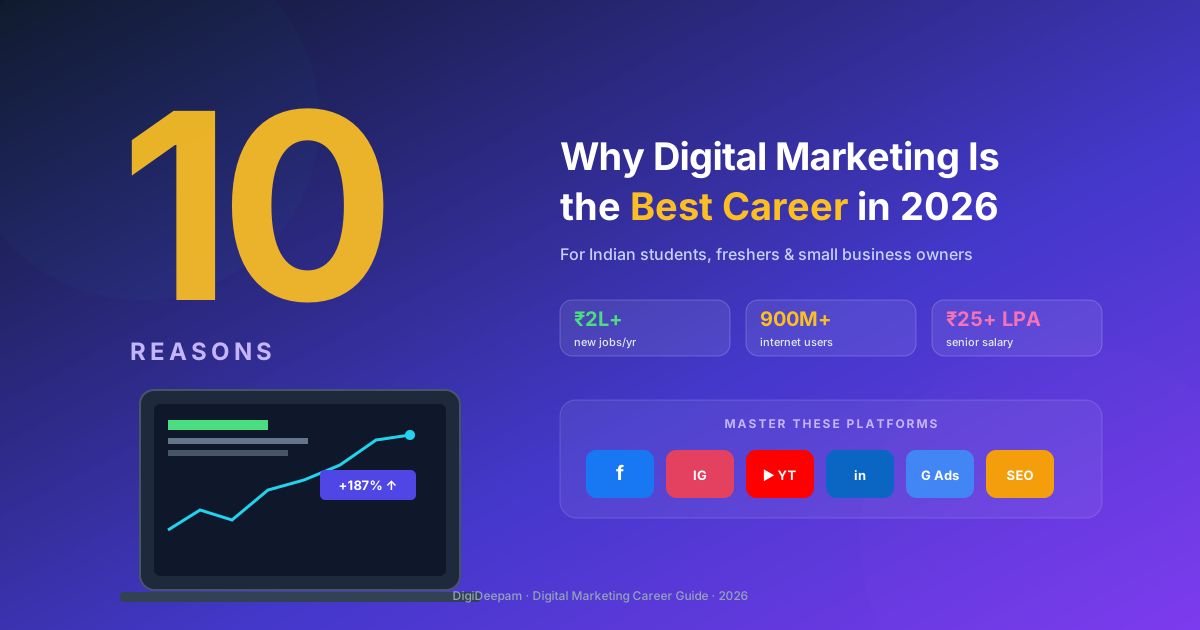
That's how many Indians are on the internet in 2026. I wrote that number twice just to make sure my brain processes it. Nine. Hundred. Million. We're second only to China. Honestly at the rate we're growing, we'll overtake them before 2030.
Now, think about what that actually means on the ground.
Every small shop in your colony needs someone for Instagram. Your dad's CA needs someone to "do his website thing". Your uncle's wedding photography studio needs reels. Zomato, Tata, boAt, Mamaearth, even the damn aloo-tikki shop near your college — all of them. Every single business in India suddenly woke up and realised "bhai hum online hai nahi, toh hum nahi hai."
And the problem? There aren't enough skilled people. Not even close.
Some numbers that actually matter. The Indian digital ad market hit ₹46,000 crore in 2025 — and it's growing past 20% every single year. Fresh digital marketing jobs opening yearly? Around 2 lakh across Naukri, LinkedIn, Indeed combined. Now the painful part — actually qualified freshers coming out of college are maybe 40,000. Maybe even less.
You see the gap right? 2 lakh roles. 40,000 skilled people. Basically 5 jobs hunting for every 1 of you. If you can do decent work and just consistently show up, you genuinely get hired. Easy as that. I wish I was making it sound dramatic but I'm not.
Why such a huge gap? Because Indian colleges, god bless them, are still teaching 2012-era marketing theory. "Four Ps of marketing" and case studies from 1998. Meanwhile, actual Instagram reels strategy and Google Ads account structure? Not in any textbook. Which is super frustrating if you're the student, but actually kinda perfect if you're willing to self-teach. I've literally seen B.A. graduates with a real portfolio beat IIM B-school students in hiring rounds. Multiple times. It's become a running joke at some startups.
Practical takeaway — you can go from "zero clue" to "first paycheck" in about 3 to 6 months. No 4-year degree wait. No CAT, no GMAT, no godfather in the HR team. And tier-2 / tier-3 cities? Actual gold mines. Every doctor, tuition centre, boutique, and restaurant owner there is desperate for someone to "do marketing properly" and can't afford to hire a Mumbai agency. That's literally your entry ticket. Starter plan right here if you want one.
2. Nobody Cares About Your College. Seriously.
This one's my favourite. And it makes a lot of parents uncomfortable.
Aapko ek baat honestly batau? In my 8 years of training people for a digital marketing career, I have literally never — not once — had a recruiter ask me "from which college is this candidate?" before the interview. They ask about portfolio. They ask what campaigns you've run. They ask what tools you know. College? Not on the radar anymore.
Compare this with my cousin Ankit (hi Ankit, if you're reading this). Poor guy did engineering from a decent college, spent four years grinding, and his first job paid ₹3.5 LPA at an IT services company in Pune. Meanwhile I know a B.A. pass graduate from Meerut, Parth his name is, who got hired at a Delhi marketing agency for ₹4 LPA straight after a 4-month SEO course. Parth's tenth-grade board score? 58 percent. Ankit's? 91 percent.
Read that para again. That's where we are in 2026.
Why does this field work like this? Because honestly, the work doesn't lie. Either your Facebook ad gets clicks or it doesn't. Either your blog ranks on Google or it sits on page 9. Either your Instagram reel gets 50K views or 50 views. There's no "woh IIT se hai toh smart hoga" bias hiding behind interview rooms. Results are visible. Everything is a number.
So what do you actually need to begin this whole journey? Honestly, very little. A smartphone, or a cheap-ish laptop. Wifi (which you already pay for anyway). Some basic English — and trust me, even shaky English is enough, you'll naturally get sharper the more you write. Around 2-3 hours a day, consistently, for a few months. And the real one nobody tells you... a weirdly thick skin. Because the first 15-20 things you try are gonna flop. Like, badly flop. That's just how this thing works.
No coding. No stats. No GATE, CAT, GMAT, UPSC, none of that exam circus. No ₹18 lakh MBA loan waiting to crush your first salary at 24.
Some of the most successful digital marketers I personally know in 2026 — a 42-year-old housewife in Bhopal running Instagram for six local boutiques, earns ₹55K a month between her kids' tuition timings. A 19-year-old college dropout in Nashik, Aman, who runs a niche SEO agency for dental clinics in Mumbai. A 58-year-old retired SBI clerk in Lucknow writing email sequences for three American SaaS companies. Different backgrounds, different ages, zero pedigree between them. All of them out-earn their "better educated" neighbours now.
Go check the careers pages of Flipkart. Nykaa. CRED. Dream11. Razorpay. You'll see it with your own eyes — "Show us a campaign you ran." "Upload your portfolio." "Complete this practical test." The degree field is increasingly blank. Some forms don't even ask. If you've ever told yourself "meri qualification hi theek nahi hai" — please, I'm begging you, delete that thought today. A digital marketing career doesn't care about your marks. It cares whether you can make ₹1 convert into ₹5. Period.
3. Let's Talk Real Money. Actual 2026 Numbers.
Okay, paisa. The part everyone secretly came here for.
I'm not going to give you vague "good salary" nonsense. I'll show you real numbers, pulled from Payscale, Glassdoor, and — more importantly — what my own students and ex-students are actually pulling home right now as of mid-2026.
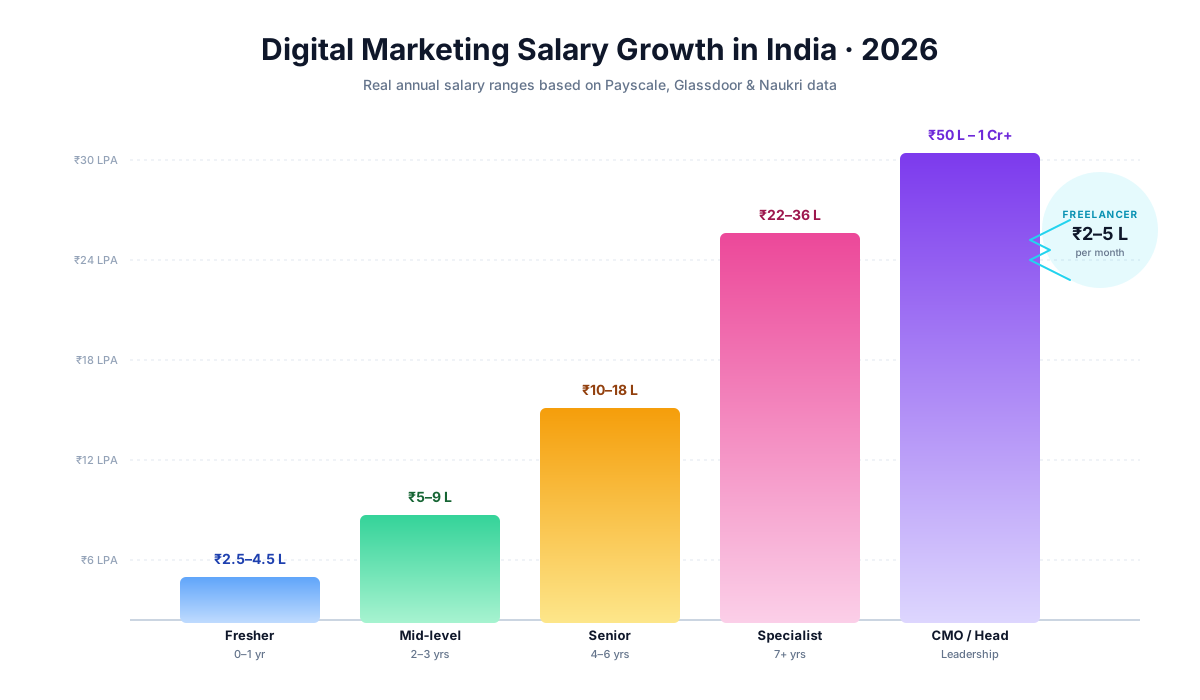
| Experience Level | Annual Salary | Monthly |
|---|---|---|
| Fresher (0-1 year) | ₹2.5 – ₹4.5 LPA | ₹20–35k |
| Mid-level (2-3 yrs) | ₹5 – ₹9 LPA | ₹40–75k |
| Senior (4-6 yrs) | ₹10 – ₹18 LPA | ₹80k – 1.5 L |
| Specialist (7+ yrs) | ₹22 – ₹36 LPA | ₹1.8 – 3 L |
| CMO / Head Roles | ₹50 LPA – 1 Crore+ | ₹4 – 10 L |
That's the job market. Solid, but honestly? Not the full story.
Freelancing. That's where things get stupid in a good way.
Sitting in your T-shirt at 2 PM on a Wednesday, you can pitch and land American or Dubai clients who'll pay you in dollars and dirhams. And $1 = ₹84 in 2026. You do the math. Even charging $1,500 a month — basically entry-level — that's ₹1.25 lakh monthly. From home. In joggers.
There's a kid I mentored, Arjun, 24 year old arts graduate from Indore. He pulls $4,500 every month doing SEO for three American SaaS startups. That's ₹3.78 lakh per month in Indian money. His father is a senior accountant at a textile firm in the same city, earns ₹85K. Arjun now pays for his own Bullet, his sister's wedding, and randomly sends his parents on Kerala trips. Awkward Diwali dinners when the extended family asks "beta kya karta hai?" But these are good problems.
Now compare with the usual "prestige" tracks our parents pushed — fresher engineer at TCS or Infosys gets ₹3.5 LPA after spending 4 years and roughly ₹10 lakh on the degree. Bank PO candidate spends 2 years in coaching and then starts at ₹4-6 LPA. MBA fresher from a middling college averages ₹5-7 LPA, minus that ₹15-25 lakh education loan that'll haunt them till 30.
A digital marketing career costs you maybe ₹25,000 upfront — and you can match those same salaries inside 2 years. Sometimes 1, if you hustle right. At senior level? Meesho, CRED, Razorpay growth leads routinely take home ₹1 crore+. Not bragging, not exaggerating — that's literally Monday's reality in 2026.
Enroll Now — Limited Seats →
4. Bangalore mein Rehne ki Zaroorat Nahi
Real talk — this one changed my perspective on careers completely.
A software engineer needs Bangalore or Hyderabad. Every good banker needs a metro. CAs need commercial hubs. IAS officers go wherever the government dumps them. Every traditional Indian career has this annoying geographic tax attached to it that nobody talks about honestly.
A digital marketer? Wherever your laptop fits is your office. That's literally the full rule.
Priya. 26. Lives in Gonda. If you don't know where Gonda is — pause, Google it, I'll wait. It's a small-ish district in eastern UP. Around 3.5 lakh people. Nothing flashy about it. Her parents both work at a local bank. Simple middle-class family.
Priya is a content marketing manager at a Delhi SaaS company. Takes home ₹85,000 a month. And — this is the kicker — she's never lived outside Gonda. Not even once. Rent is ₹7K for a 2BHK. Food maybe ₹5K. She saves a casual ₹65,000 every month and has breakfast with her amma on Sundays.
Now her same-college friend Ayesha, who's in Bangalore doing frontend development at a startup. Salary ₹95K. Sounds better. Right? Bangalore rent eats ₹25K. Food another ₹12K. Uber-everywhere ₹8K. By end of month she saves maybe ₹20K if nothing crazy happens.
Priya saves ₹65K. Ayesha saves ₹20K. Same age, same background, same effort. Over 5 years that difference is ₹27 lakh — literally a whole flat in tier-3 India. From nothing but smart geography.
Look, I'm not saying don't go to Bangalore. Some people love it. Point is — you get to choose in a digital marketing career. Remote is not the exception anymore, it's the default. COVID killed the "come to our office" culture for digital teams and it's not coming back. I've got students in Guwahati, Siliguri, Kochi, a random fishing village near Vizag, and one guy runs his Facebook ads business from a Goa beach cafe (though his wifi is sometimes sus). Many of them have literally never met their colleagues in person. Slack DMs and Zoom calls, that's the whole relationship. And they're absolutely thriving.
5. Starting Cost? Honestly Almost Nothing
Something about the Indian education system actually annoys me and I have to say it.
Somehow, we've normalized this idea that every "respectable" career in India requires you (or your parents) to bleed money before you earn your first rupee. MBA from any halfway decent college — budget ₹15 to 25 lakh. Engineering — ₹8 to 15 lakh plus 4 years of your youth. Medical — forget about it, ₹20 lakh minimum and 6+ years. CA — cheaper on fees but costs you 5 years of sanity and a pass rate that would make you cry.
We treat this as normal. It's honestly not normal. It's kind of bizarre when you actually stop to think about it.
A digital marketing career on the other hand? Under ₹25,000. Total. One-time. Done.
What does that ₹25K actually cover, you might ask. A proper structured online course is the main expense — ours runs around ₹15-25K depending on format, but honestly you can find decent cheaper options at ₹8-10K if you shop around on marketplaces (just check reviews carefully, half of them are scammy). The phone or laptop you already own, that's free. The wifi you already pay for, free. And the actual tools you'll use day to day — Canva Free, Google Analytics, Meta Ads Library, Mailchimp's free tier, even ChatGPT's free version — every single one of them costs zero rupees. Genuinely zero.
That's the whole list. I'm not hiding costs in fine print. There's no surprise "additional materials ₹8K" fee coming.
My students generally recover the course fee in their first 8-10 weeks. Some recover it in three weeks. Everything after that is just clean profit on their time. Compare that with a 4-year engineering degree where you don't earn a single rupee until year 5, and your first TCS salary barely covers the EMI on your education loan.
Here's the part most "course gurus" won't admit openly — you can legitimately learn about 70% of digital marketing basics for zero rupees. Google Digital Garage has genuine certified courses. HubSpot Academy is completely free. Meta Blueprint too. YouTube has easily 20,000 hours of real, useful tutorials. The self-learning ceiling is honestly pretty high in this field.
So why pay for a course at all? Three honest reasons. Structure. Speed. And a mentor who stops you wasting 6 months on the wrong stuff. If you're disciplined and okay with a slower route, go fully free — no shame, many have. If you want to chop 12-18 months off the learning curve and get real feedback on your actual work, pay something. Both routes work. Genuinely zero judgment either way.
6. You're Not Picking One Job. You're Picking 8.
Most careers lock you in hard. You pick a specialization at age 20 and you basically suffer with it till 45. Doctor? You're a doctor. Engineer? You're an engineer. Branch switching after 4 years? Good luck.
Digital marketing is weirdly generous in this regard.
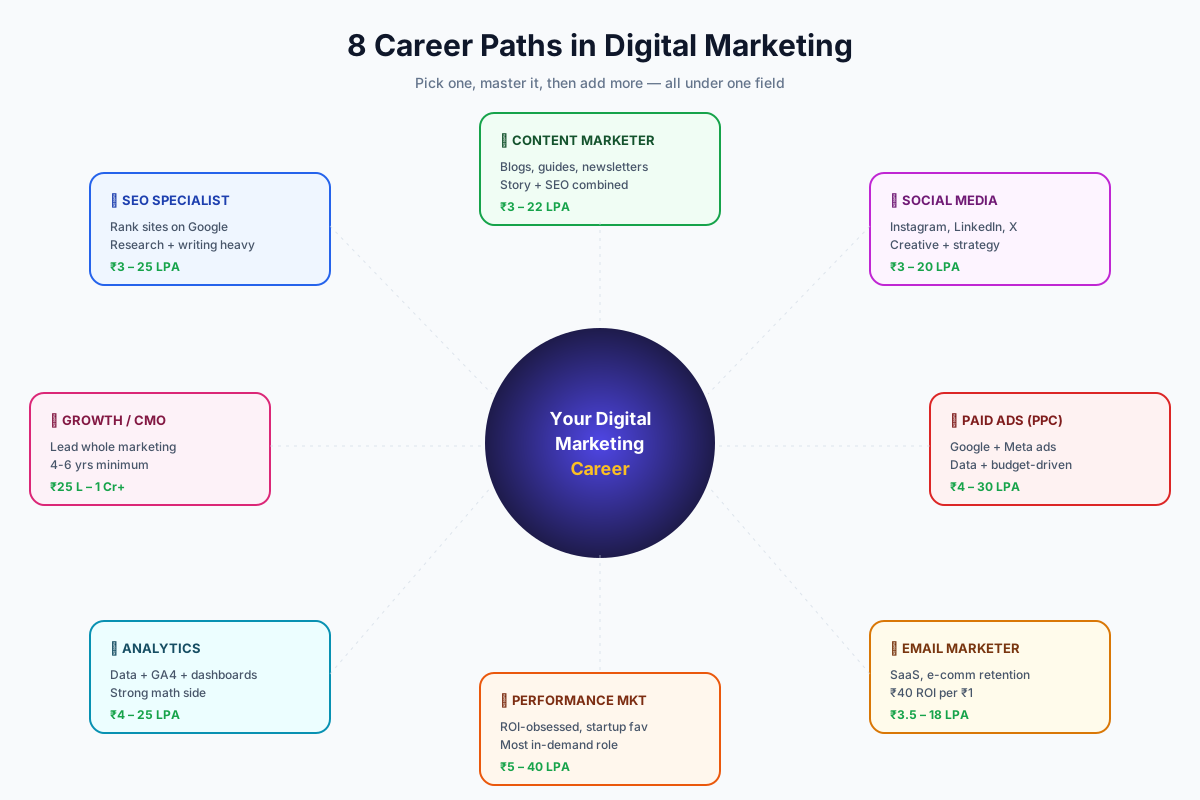
Under the "digital marketing" umbrella you literally get eight completely different career tracks to choose from. I'll walk through them, but please keep one thing in mind — you pick one, get genuinely good at it, and if you hate it after 2 years, you can pivot to another without starting from absolute zero. Which in India, trust me, is kinda a miracle.
So let me just casually go through them. SEO Specialist is the first one — these are the people who make websites rank on Google. Lot of detective-style work, keyword hunting, content planning, backlink building. If you quietly love research and don't mind writing, this is honestly your jam. Salaries range from ₹3 LPA at fresher level all the way up to ₹25 LPA for senior folks. Then there's the Paid Ads Manager, also called PPC manager, who runs Google Ads and Meta Ads and basically lives inside numbers like CPM, CPC, CPA, ROAS. Pure data-lover territory. Pays anywhere between ₹4 to ₹30 LPA. Senior PPC people at Flipkart and Myntra are regularly clearing ₹30 LPA plus, no exaggeration.
Social Media Manager comes next — running brand pages on Instagram, LinkedIn, YouTube, creating reels every single day, chasing engagement, coordinating with influencers and creators. Creative side meets strategic side. ₹3 to ₹20 LPA. Then we have the Content Marketer and Copywriter people, who write stuff that sells — blogs, emails, landing pages, ad copy, whatever needs words. If language is your strong area, this field is honestly paradise for you. ₹3 to ₹22 LPA.
Email Marketing Specialist is the role I personally think is the most underrated on this whole list. Email genuinely has the highest ROI of any marketing channel — around ₹40 returned for every ₹1 spent, per DMA studies. Yet most people skip it because it sounds boring. Their loss. ₹3.5 to ₹18 LPA. Performance Marketing Manager is probably the hottest Indian startup role in 2026 right now, hands down. You're personally on the hook for driving revenue through ads. High pressure but big pay — ₹5 to ₹40 LPA easily.
Marketing Analyst is for the data-curious people. GA4, Looker, attribution modelling, dashboards everywhere. If you loved Excel in college (weird flex but okay), this is your zone. ₹4 to ₹25 LPA. And finally, Growth / CMO — you run the whole marketing function for a company. Typically needs 4 to 6 years of being really good at 1 or 2 of the above roles first. Top end here is ₹25 LPA to ₹1 crore plus.
And honestly even this list isn't exhaustive. There are niches like YouTube Channel Manager, Influencer Marketing Lead, Affiliate Program Manager, App Store Optimization Specialist (ASO), Community Manager, Conversion Rate Optimizer. All of them pay well. All of them have a shortage of skilled people. Pick whichever resonates.
The mental shift you need to make here — you're not committing to one single career path for life. You're entering a field where switching specializations is actually encouraged and totally normal. Start with SEO, move to Paid Ads in 2 years if SEO bores you, become a Growth Lead by year 5, launch your own agency by year 7 if you feel like it. Genuinely common trajectory among my older students.
7. Dollars mein Kamana Hai? Ab Possible Hai.
This is the section that made me cry a little when I first understood it in 2019.
See, if you're reading this in India and your English is at least okay-ish, you are sitting on something ridiculously valuable. You can sell services to the entire world. No visa. No relocation. No passport stamp. Your address is "laptop at home" and that's fine with your clients.
Dollar math time. $1 = ₹84 in 2026. Small US business pays freelancer $1,000 to $3,000 a month for their marketing. For them, that's peanuts. For you in India? That's ₹84,000 to ₹2.5 lakh every single month. Working from your bedroom. In a stained T-shirt, probably.
And here's the counter-intuitive bit most people miss — you don't need to be "world class" to pull this off. Small American businesses (dentists, yoga studios, real estate agents, online coaches, small ecom stores) genuinely need marketing help but absolutely cannot afford US-based agencies charging $5,000 a month. An Indian freelancer offering the same for $800-1,500? That's their dream outcome.
Where do these opportunities actually exist? Upwork — millions of active projects, easiest place to start even if you have zero experience. Fiverr — packaged "gigs" that work really well for SEO, writing, ads. LinkedIn — direct cold outreach to founders, my personal favourite, zero platform fees. Toptal — premium clients, ₹3-10 lakh monthly paychecks, much harder to crack but worth trying once you have some portfolio.
Two people I actually know, real humans not fictional case studies:
Sanyam. 23. Patna boy. Has literally never left Bihar. Runs a two-person agency with his cousin serving four Canadian clients. $8,000 a month total revenue, so he takes home around ₹6.7 lakh after splitting. Uses that money to pay his younger sister's MBA fees and still saves aggressively. Still lives with his parents. His mom keeps asking when he'll get "a proper job."
Ritu. Mother of two in Kolkata. Started writing email sequences for US SaaS companies during her kids' school hours, mainly because she was bored at home after her MBA. Now earns ₹1.2 lakh a month. Works roughly 4 hours a day. Quote from her last conversation with me — "Main apne pati se zyada kama rahi hoon aur phir bhi bachhon ko school drop karti hoon. Best of both worlds hai honestly."
Now compare with almost any other Indian profession. A dentist literally cannot treat American patients from here. An engineer can freelance — yes — but it's mostly code-heavy and hyper-saturated with lakhs of competitors. A CA can't practice US tax law without US-specific credentials. A digital marketing career? The internet is your passport. That's it. Full freelancing deep-dive here if you want the actual playbook.
8. AI Makes Digital Marketing Bigger, Not Dead
"Bhai, AI toh sab replace kar dega. Kya fayda digital marketing seekhne ka?"
I hear this question about 40 times a month now. From students, from worried parents, from random strangers on Instagram DMs. Short honest answer — no. Long honest answer, which is the one that matters — sit down, I'll explain.
Let me hit you with a quick history lesson first. Calculators were invented in 1960s. Were accountants supposed to die out? Spoiler alert — Indian CAs today earn more than ever. Excel came in the 80s, people said analysts were finished. Today data analyst is one of the highest-paid jobs in every country. Google arrived in 1998, researchers were supposed to be obsolete. Today there are 100 times more research roles than in 1998. Every single "AI/tech will kill X career" prediction in the last 60 years has been wrong. Not some. Not most. Every single one.
AI is doing the exact same thing right now. Amplifying humans who use it well. Retiring humans who refuse to touch it.
Practically speaking — what AI actually does for a working marketer like me or my students? First drafts of ad copy in 5 minutes instead of 30. Dozens of headline and visual variations in seconds. Campaign data analysis that used to take 2 days now takes 20 minutes. Keyword research and competitor spying basically on autopilot. It's like hiring three junior assistants for free.
But what AI still absolutely cannot do, even in late 2026? Understand a brand's specific voice, that weird way a founder speaks that makes their brand unique. Strategize a launch for a product nobody has heard of yet. Negotiate with influencers on WhatsApp at 11 PM. Pick the right creative direction for boAt versus Fossil versus Mamaearth (three completely different customer personalities). Build the actual human relationships that get your ₹50 lakh campaign approved by a CEO. These are all still very much human skills and will stay that way for a while.
So who wins in 2026? The marketers who weaponize AI. Who loses? The ones still insisting "I write all my drafts from scratch" like it's some moral flex. Spoiler — nobody cares how you made the draft, they care if the campaign worked.
Look at Nykaa, Dream11, CRED, Paytm, Zepto. Their 2026 marketing budgets are bigger than ever. Not smaller. Why? Because AI lets them run 10 simultaneous campaigns with a team of 3. But they still need sharp marketers to steer those campaigns. That steering job? That's you. HubSpot's 2026 State of Marketing confirms global marketing spend is up across basically every region.
If "AI will eat my career" was the voice stressing you out at night — flip it. AI is the reason a digital marketing career in 2026 is more valuable, not less. I honestly wish I was starting out today, not in 2015.
So Basically, In Five Lines
For folks who skimmed (no judgment, I do it too):
The whole thing in one breath — demand is genuinely nuts (900 million of us online and 2 lakh fresh roles every year that nobody can fill properly), nobody who matters cares about your college, you can begin for under ₹25K and recover that in like two months if you actually try, you can do this from Gonda or Guwahati or some random Goa cafe and still pull metro money, and AI? Not the killer everyone's scared of. Honestly the opposite — it's making the people who actually use it properly worth like 10x more in 2026 than they were in 2022. So uh, that's the article.
Closing Thoughts (Bas, Last Para)
Okay I'll stop.
Real talk for the last time. Look, a digital marketing career in 2026 India is honestly low risk and the ceiling is kinda silly high. You can begin with ₹15K in your pocket and hit ₹1 lakh a month inside two years if you keep showing up. That's not me hyping things up for the article — that's literally the number my own students are hitting. Some hit it faster, some take a bit longer, but the trajectory is real.
Your college? Your city? The family you were born in? None of that stuff matters here. (Wild, no?) What matters is you pick one skill — I'd really suggest SEO or Instagram marketing as the easiest entry points, but honestly anything works — grind on it for like 3 to 6 months, and then put your actual work somewhere people can see and judge it. Cold portfolios kill careers. Visible portfolios start them.
And AI. Look. I keep saying this and people keep ignoring it — AI is the best thing that's happened to this field in maybe a whole decade. Learn it. Use it daily. Stop letting it scare you. The people who refused to use Excel in the 1990s? Most of them aren't doing accounting anymore. Same logic, different decade.
Eight years of mentoring students across India and my completely honest take is — if you're somewhere between 18 and 35, reasonably smart, and willing to put in real effort consistently, a digital marketing career is probably the single best bet on the table right now. It's not perfect. Nothing is. Definitely not guaranteed either, because guarantees don't exist anywhere in life. But statistically? Best-odds game I can see on the board in 2026.
And honestly — if even one line in this whole article made some sense to you, just start. Like today. Don't keep overthinking. Don't keep waiting for the "right time." There's no right time, that's a lie we tell ourselves to delay. Just start. The Rahuls and Priyas and Arjuns I told you about earlier — they all started without feeling ready either.
Enroll Now →